

Treasury Laws Amendment (Building a Stronger and Fairer Super System) Act 2026
(8 of 2026)
An Act to amend the law relating to taxation and superannuation, and for related purposes
[Assented to 13 March 2026]
The Parliament of Australia enacts:
1 Short title
This Act is the Treasury Laws Amendment (Building a Stronger and Fairer Super System) Act 2026.
2 Commencement
(1) Each provision of this Act specified in column 1 of the table commences, or is taken to have commenced, in accordance with column 2 of the table. Any other statement in column 2 has effect according to its terms.
|
Commencement information |
||
|---|---|---|
|
Column 1 |
Column 2 |
Column 3 |
|
Provisions |
Commencement |
Date/Details |
|
1. Sections 1 to 3 and anything in this Act not elsewhere covered by this table |
The day this Act receives the Royal Assent. |
13 March 2026 |
|
2. Schedule 1 |
At the same time as the Superannuation (Building a Stronger and Fairer Super System) Imposition Act 2026 commences. However, the provisions do not commence at all if that Act does not commence. |
1 April 2026 |
|
3. Schedules 2 and 3 |
The first 1 January, 1 April, 1 July or 1 October to occur after the day this Act receives the Royal Assent. |
1 April 2026 |
|
4. Schedule 4 |
1 July 2027. |
1 July 2027 |
Note: This table relates only to the provisions of this Act as originally enacted. It will not be amended to deal with any later amendments of this Act.
(2) Any information in column 3 of the table is not part of this Act. Information may be inserted in this column, or information in it may be edited, in any published version of this Act.
3 Schedules
Legislation that is specified in a Schedule to this Act is amended or repealed as set out in the applicable items in the Schedule concerned, and any other item in a Schedule to this Act has effect according to its terms.
Schedule 1 Better targeted superannuation concessions
Defence Force Retirement and Death Benefits Act 1973
1 Part VIB (heading)
Repeal the heading, substitute:
Part VIB - Release of benefit to meet deferred Division 293 or 296 tax liability
2 Section 49K
After "item 3", insert "or 4".
3 Section 49K (note)
After "Subdivision 133-C", insert "or 134-C".
4 Paragraph 49M(1)(a)
After "item 3", insert "or 4".
5 At the end of section 49N
Add:
(4) If more than one release authority lump sum is paid in relation to release authorities issued to a person, a reference in the formula in subsection (2) to the release authority lump sum is taken to be a reference to the total amount of those release authority lump sums.
Governor-General Act 1974
6 Subsection 2A(2)
Insert:
Division 293 tax law has the meaning given by the Income Tax Assessment Act 1997.
Division 296 tax law has the meaning given by the Income Tax Assessment Act 1997.
release authority lump sum has the meaning given by subsection 4BA(1).
7 Section 4BA (heading)
Repeal the heading, substitute:
4BA Release of money to meet deferred Division 293 or 296 tax liability
8 Subsection 4BA(1)
After "item 3", insert "or 4".
9 Subsection 4BA(1) (note)
After "Subdivision 133-C", insert "or 134-C".
10 Subsection 4BA(2)
Omit "(within the meaning of the Income Tax Assessment Act 1997) applies", substitute "and the Division 296 tax law apply".
11 At the end of section 4BA
Add:
(11) If a release authority lump sum is paid in relation to a release authority issued to a person and an associate deferred allowance is payable to the person, the annual rate of the allowance is to be reduced so that it equals the amount worked out using this formula:

where:
age factor means the age factor for the person on the day on which the allowance becomes payable (see subsection (12)).
pre-reduction rate means the annual rate of the allowance that would, apart from this section (but having regard to any other provisions of this Act that affect that rate), be payable to the person.
(12) The Finance Secretary may, by legislative instrument, determine the age factor, or the method for working out the age factor, for the purposes of subsection (11).
(13) If more than one release authority lump sum is paid in relation to release authorities issued to a person, a reference in the formula in subsection (7) or (11) to the release authority lump sum is taken to be a reference to the total amount of those release authority lump sums.
Income Tax Assessment Act 1997
12 Section 12-5 (after section headed "superannuation - deductibility of contributions")
Insert:
|
superannuation - Division 296 tax |
|
|
no deduction for |
26-99A |
13 After section 26-99
Insert:
26-99A Division 296 tax cannot be deducted
You cannot deduct under this Act any of the following:
(a) an amount of *Division 296 tax that you pay;
(b) an amount of *Division 296 debt account discharge liability that you pay.
14 After Division 295
Insert:
Division 296 - Better targeted superannuation concessions
Table of Subdivisions
Guide to Division 296
296-A Object of this Division
296-B Better targeted superannuation concessions
296-C When tax is payable
296-D Modifications for temporary residents who depart Australia
296-E Other provisions
Guide to Division 296
296-1 What this Division is about
This Division reduces the concessional tax treatment of superannuation earnings for individuals with total superannuation balances that, just before the start of an income year or at the end of the year, are greater than the large superannuation balance threshold for the year.
There are special rules for foreign superannuation funds, constitutionally protected State higher level office holders, certain justices of the Commonwealth, the Australian Capital Territory and the Northern Territory, non-complying superannuation plans and temporary residents who depart Australia.
Note: Part 3-20 in Schedule 1 to the Taxation Administration Act 1953 contains rules about the administration of the Division 296 tax.
Subdivision 296-A - Object of this Division
Table of sections
Operative provisions
296-5 Object of this Division
Operative provisions
296-5 Object of this Division
The object of this Division is to reduce the concessional tax treatment of superannuation earnings for individuals with *total superannuation balances that, just before the start of an income year or at the end of the year, are greater than the *large superannuation balance threshold for the year.
Subdivision 296-B - Better targeted superannuation concessions
Guide to Subdivision 296-B
296-10 What this Subdivision is about
Subject to certain exceptions, a tax is payable on a proportion of your earnings in relation to superannuation interests if your total superannuation balance just before the start of the year or at the end of the year exceeds the large superannuation balance threshold for the year. A higher amount of tax is payable to the extent that the total superannuation balance exceeds the very large superannuation balance threshold for the year.
Table of sections
Liability for tax
296-15 Liability for tax
296-20 Exception - child recipients of superannuation income streams
296-25 Exception - structured settlement contributions
Large superannuation balance threshold and very large superannuation balance threshold
296-30 Large superannuation balance threshold
296-35 Very large superannuation balance threshold
Taxable superannuation earnings and related concepts
296-40 Your taxable superannuation earnings
296-45 Your very large superannuation balance earnings component
296-50 Total superannuation balance taken to be nil after death
296-55 Your total superannuation earnings
296-60 Division 296 fund earnings
296-65 Your relevant superannuation earnings for a superannuation interest - general rule
296-70 Your relevant superannuation earnings for a superannuation interest - certain defined benefit and other interests
296-75 Modifications
Liability for tax
296-15 Liability for tax
Subject to sections 296-20 and 296-25, you are liable to pay *Division 296 tax for an income year if you have *taxable superannuation earnings for the year.
Note: The amount of the tax is set out in the Superannuation (Building a Stronger and Fairer Super System) Imposition Act 2026.
296-20 Exception - child recipients of superannuation income streams
You are not liable to pay *Division 296 tax for an income year if you are a *child recipient of a *superannuation income stream at any time in the year.
296-25 Exception - structured settlement contributions
You are not liable to pay *Division 296 tax for an income year if a *structured settlement contribution is made in respect of you in that year or in any earlier income year.
Large superannuation balance threshold and very large superannuation balance threshold
296-30 Large superannuation balance threshold
The large superannuation balance threshold is:
(a) for the 2026-27 income year - $3,000,000; or
(b) for the 2027-28 income year or a later income year - the amount worked out by indexing annually the amount mentioned in paragraph (a).
Note: Subdivision 960-M shows how to index amounts. However, annual indexation does not necessarily increase the amount of the threshold: see section 960-285.
296-35 Very large superannuation balance threshold
The very large superannuation balance threshold is:
(a) for the 2026-27 income year - $10,000,000; or
(b) for the 2027-28 income year or a later income year - the amount worked out by indexing annually the amount mentioned in paragraph (a).
Note: Subdivision 960-M shows how to index amounts. However, annual indexation does not necessarily increase the amount of the threshold: see section 960-285.
Taxable superannuation earnings and related concepts
296-40 Your taxable superannuation earnings
(1) You have taxable superannuation earnings for an income year of the amount worked out using the following formula if:
(a) your *total superannuation balance just before the start of the year, or at the end of the year, is greater than the *large superannuation balance threshold for the year; and
(b) the amount of your *total superannuation earnings for the year is greater than nil:

(2) For the purposes of the formula in subsection (1), the percentage is the amount (expressed as a percentage) worked out using the following formula:

where:
your total superannuation balance reference amount is the greater of:
(a) your *total superannuation balance (if any) just before the start of the year; and
(b) your total superannuation balance (if any) at the end of the year.
(3) The result of the formula in subsection (2) must be rounded to 2 decimal places (rounding up if the third decimal place is 5 or more).
296-45 Your very large superannuation balance earnings component
(1) You have a very large superannuation balance earnings component for an income year of the amount worked out using the following formula if your *total superannuation balance just before the start of the year, or at the end of the year, is greater than the *very large superannuation balance threshold for the year:

(2) For the purposes of the formula in subsection (1), the percentage is the amount (expressed as a percentage) worked out using the following formula:

where:
your total superannuation balance reference amount is the greater of:
(a) your *total superannuation balance (if any) just before the start of the year; and
(b) your total superannuation balance (if any) at the end of the year.
(3) The result of the formula in subsection (2) must be rounded to 2 decimal places (rounding up if the third decimal place is 5 or more).
296-50 Total superannuation balance taken to be nil after death
For the purposes of sections 296-40 and 296-45, your *total superannuation balance at a particular time is taken to be nil if, as at that time, you have died.
296-55 Your total superannuation earnings
(1) The amount of your total superannuation earnings for an income year is the total of your *relevant superannuation earnings for the year for:
(a) each *superannuation interest of yours that you have at any time in the year; and
(b) each superannuation interest that supports a *superannuation income stream of which you are a *retirement phase recipient at any time in the year because of the death of another person.
(2) For the purposes of working out that total, the following are taken to be nil:
(a) your *relevant superannuation earnings for a *superannuation interest in a *superannuation plan that is a *foreign superannuation fund for the year;
(b) your relevant superannuation earnings for a superannuation interest that is a *Division 296 excluded interest in relation to the year;
(c) an amount prescribed by the regulations for the purposes of this paragraph.
(3) A *superannuation interest mentioned in paragraph (1)(a) or (b) is a Division 296 excluded interest in relation to the year if:
(a) column 1 of an item of the following table applies to you for the year; and
(b) the interest is specified in column 2 of the item.
|
Excluded superannuation interests |
||
|---|---|---|
|
Item |
Column 1
Individual to which item applies for a year |
Column 2
Superannuation interest |
|
1 |
at any time in the year, you are declared by the regulations to be an individual to whom this item applies |
a *superannuation interest in a *constitutionally protected fund |
|
2 |
at any time before or in the year, you were or are: (a) a Justice of the High Court; or (b) a justice or judge of a court created by the Parliament |
a *superannuation interest in the *superannuation fund established under the Judges' Pensions Act 1968 |
|
3 |
at any time before or in the year, you were or are the Chief Justice or a Judge of the Supreme Court of the Australian Capital Territory |
a *superannuation interest in the *superannuation fund established under the Judges' Pensions Act 1968, as it applies under the Supreme Court Act 1933 (ACT) |
|
4 |
at any time before or in the year, you were or are the Chief Justice or a Judge of the Supreme Court of the Northern Territory |
a *superannuation interest in the *superannuation fund established under the Supreme Court (Judges Pensions) Act 1980 (NT) |
|
5 |
both: (a) at any time in the year, you are a *retirement phase recipient of a *superannuation income stream because of the death of another person; and (b) item 1, 2, 3 or 4 applies to that other person for the year, or would have applied to that other person for the year but for the person's death |
a *superannuation interest that: (a) supports the income stream; and (b) is of a kind specified in column 2 of that item |
|
6 |
both: (a) at any time in the year: (i) you have a *superannuation interest in a *superannuation plan; or (ii) you are a *retirement phase recipient of a *superannuation income stream, supported by a superannuation interest in a superannuation plan, because of the death of another person; and (b) the superannuation plan: (i) isnot a *complying superannuation plan for the year; and (ii) is not a *foreign superannuation fund for the year |
the superannuation interest |
(4) Nothing in subsection (2) or (3) limits section 6 of the Superannuation (Building a Stronger and Fairer Super System) Imposition Act 2026.
Note: Section 6 of the Superannuation (Building a Stronger and Fairer Super System) Imposition Act 2026 provides that Division 296 tax is not imposed in relation to a person if the imposition would exceed the legislative power of the Commonwealth.
296-60 Division 296 fund earnings
Superannuation entities (not including RSA providers or pooled superannuation trusts)
(1) The Division 296 fund earnings for an income year for an entityto which Division 295 (about taxation of superannuation entities) applies is the amount worked out using the following formula:

where:
assessable contributions is the total of the contributions that are included in the entity's assessable income under Subdivision 295-C for the year.
net exempt current pension income is the result of:
(a) working out the total amount of the entity's *exempt income under sections 295-385 and 295-390 for the year; and
(b) subtracting the total deductions the entity could make if the exempt income were assessable income, to the extent attributable to the exempt income.
Note 1: Sections 295-385 and 295-390 are about income from assets set aside or otherwise used to meet current pension liabilities.
Note 2: Sections 296-50, 296-60 and 296-65 of the Income Tax (Transitional Provisions) Act 1997, which provide for certain adjustments relating to CGT for the purposes of working out Division 296 fund earnings, may be relevant to working out net exempt current pension income under this subsection in some circumstances.
pooled superannuation trust component is the total of any amounts for the year the entity has under subsection (2).
relevant taxable income or loss is:
(a) the entity's taxable income for the year; or
(b) for an income year that is a *loss year - the amount of the entity's *tax loss for the year, expressed as a negative amount.
Note 1: Adjustments may apply in relation to the cost base or reduced cost base of a CGT asset that is an asset of a small superannuation fund at the end of 30 June 2026: see section 296-50 of the Income Tax (Transitional Provisions) Act 1997.
Note 2: Adjustments apply in relation to net capital gains of complying superannuation funds if relevant to working out a person's relevant superannuation earnings for a superannuation interest for the 2026-27 income year to the 2029-30 income year: see section 296-60 of the Income Tax (Transitional Provisions) Act 1997.
Note 3: Deferred notional gains are disregarded for the purposes of working out the entity's relevant taxable income or loss under this subsection: see subsection 296-65(1) of the Income Tax (Transitional Provisions) Act 1997.
Note 4: Certain matters are to be disregarded in working out the entity's relevant taxable income or loss: see subsection (3) of this section.
(2) For the purposes of the definition of pooled superannuation trust component in subsection (1), the entity has an amount under this subsection equal to the amount worked out using the following formula if it holds any units in a *pooled superannuation trust at any time during the trust's income year (the relevant year ):
(a) that is the same period as the entity's income year mentioned in subsection (1); or
(b) that, of the trust's income years, covers the most of the entity's income year:

where:
entity's average units is the average number of units in the trust during the relevant year as attributable to the holdings of the entity.
total average units is the average number of units in the trust during the relevant year.
(3) In working out the entity's relevant taxable income or loss in relation to an income year for the purposes of subsection (1):
(a) disregard paragraph 295-100(2)(c); and
(b) disregard paragraph 70B(2A)(b) of the Income Tax Assessment Act 1936; and
(c) in determining any *net capital gain or *net capital loss for the year, or any deductions to the extent they are attributable to a net capital gain for the year, disregard the following (except in determining any previously unapplied net capital losses from earlier income years):
(i) section 118-12 (about assets used to produce exempt income or non-assessable non-exempt income) of this Act, to the extent it applies to a *capital gain or *capital loss that a *complying superannuation entity makes from a *segregated current pension asset;
(ii) section 118-320 (about segregated current pension assets of a complying superannuation entity).
Note 1: Paragraph 295-100(2)(c) is about deductions for fees and charges for units in a pooled superannuation trust that are segregated current pension assets.
Note 2: Paragraph 70B(2A)(b) of the Income Tax Assessment Act 1936 is about deductions for a loss on the disposal or redemption of certain securities that are segregated current pension assets.
Note 3: The provisions mentioned in paragraph (c) of this subsection still apply for the purposes of working out the entity's net exempt current pension income under subsection (1) of this section.
Pooled superannuation trusts
(4) Despite subsection (1), the Division 296 fund earnings for an income year for a *pooled superannuation trust is the amount worked out using the following formula:

where:
assessable transferred contributions is the total of the amounts included in the assessable income of the trust under item 1 of the table in section 295-320 (about certain amounts included in assessable income) for the year.
net exempt current pension income is the result of:
(a) working out the total amount of the trust's *exempt income under section 295-400 for the year; and
(b) subtracting the total deductions the entity could make if the exempt income were assessable income, to the extent attributable to the exempt income.
Note 1: Section 295-400 is about income of a pooled superannuation trust attributable to current pension liabilities.
Note 2: Sections 296-50, 296-60 and 296-65 of the Income Tax (Transitional Provisions) Act 1997, which provide for certain adjustments relating to CGT for the purposes of working out Division 296 fund earnings, may be relevant to working out net exempt current pension income under this subsection in some circumstances.
relevant taxable income or loss is:
(a) the trust's taxable income for the year; or
(b) for an income year that is a *loss year - the amount of the trust's *tax loss for the year, expressed as a negative amount.
Note 1: A person will not have relevant superannuation earnings in relation to a pooled superannuation trust. However, Division 296 fund earnings of pooled superannuation trusts are included in the Division 296 fund earnings of certain entities under subsection (1) of this section.
Note 2: Adjustments apply in relation to net capital gains of pooled superannuation trusts if relevant to working out a person's relevant superannuation earnings for a superannuation interest for the 2026-27 income year to the 2029-30 income year: see section 296-60 of the Income Tax (Transitional Provisions) Act 1997.
Note 3: Deferred notional gains are disregarded for the purposes of working out the trust's relevant taxable income or loss under this subsection: see subsection 296-65(2) of the Income Tax (Transitional Provisions) Act 1997.
RSA providers that are not life insurance companies
(5) Despite subsection (1) of this section, the Division 296 fund earnings for an income year for an *RSA provider that is not a *life insurance company is the amount worked out using the following formula:

where:
assessable contributions is the total of the contributions that are included in the *RSA provider's assessable income under Subdivision 295-C for the year.
relevant exempt income is the total amount of the *RSA provider's *exempt income under items 2 and 3 of the table in section 295-405 (about other exempt income) for the year.
RSA providers that are life insurance companies
(6) The Division 296 fund earnings for an income year for an *RSA provider that is a *life insurance company is the amount worked out using the following formula:

where:
relevant annuity income is the total of the amounts of the *RSA provider's assessable income mentioned in paragraphs 320-137(3)(d) and (e) (about amounts credited to *RSAs from which *annuities are paid) for the year.
relevant taxable income is the total of the amounts included in the assessable income of the *RSA provider under paragraph 320-137(2)(f) (about amounts credited and debited to *RSAs) for the year.
Other matters
(7) The Division 296 fund earnings for an income year for an entity is nil if, apart from this subsection, it would be negative.
296-65 Your relevant superannuation earnings for a superannuation interest - general rule
(1) Your relevant superannuation earnings for an income year ( your year ) for a *superannuation interest is the amount attributable to the interest under this section, of the *Division 296 fund earnings for:
(a) the entity that is:
(i) for an interest in a *superannuation fund - the superannuation fund; or
(ii) for an interest in an *approved deposit fund - the approved deposit fund; or
(iii) for an *RSA - the *RSA provider; and
(b) the income year of that entity that is the same period as your year (or that, of the income years of the entity, covers the most of your year).
(2) Subsection (1) does not apply in relation to:
(a) a *superannuation interest that, at any time in your year:
(i) is or includes a *defined benefit interest; and
(ii) is not in the *retirement phase; or
(b) a superannuation interest that is prescribed by the regulations for the purposes of this paragraph.
Note: See section 296-70 in relation to superannuation interests mentioned in paragraphs (a) and (b) of this subsection.
General attribution requirement
(3) The amount attributable to the *superannuation interest must be determined on a fair and reasonable basis, having regard to the matters prescribed by the regulations for the purposes of this subsection.
Specific requirements for interests in small superannuation funds and prescribed interests
(4) Subsection (3) does not apply if the *superannuation interest is:
(a) a superannuation interest in a *small superannuation fund; or
(b) a superannuation interest prescribed by the regulations for the purposes of this paragraph.
(5) The amount attributable to such a *superannuation interest must instead be determined in accordance with the regulations.
(6) Regulations made for the purposes of subsection (5):
(a) may provide for the amount attributable to the interest to be determined wholly or partly by reference to an *actuary's certificate; and
(b) may specify circumstances in which a nil amount is attributable to the interest.
296-70 Your relevant superannuation earnings for a superannuation interest - certain defined benefit and other interests
(1) Your relevant superannuation earnings for an income year for a *superannuation interest mentioned in subsection 296-65(2) is the amount worked out using the following formula:
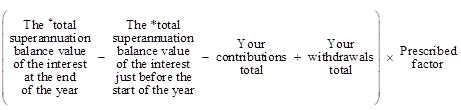
where:
prescribed factor is the value prescribed by the regulations for the purposes of this definition.
your contributions total is the amount (which may be a nil amount) determined in accordance with regulations made for the purposes of this definition.
your withdrawals total is the amount (which may be a nil amount) determined in accordance with regulations made for the purposes of this definition.
(2) For the purposes of subsection (1), if the interest does not exist at the end of the year, or just before the start of the year, the *total superannuation balance value of the interest at that time is taken to be nil.
296-75 Modifications
(1) Section 296-65 or 296-70 has effect in relation to an individual subject to any modifications prescribed by the regulations for the purposes of this subsection.
(2) Without limiting subsection (1), regulations made for the purposes of that subsection may modify section 296-65 or 296-70 in relation to an individual in different ways depending on any of the following matters:
(a) the individual to whom the modification relates;
(b) whether a *superannuation interest of the individual is in the *retirement phase;
(c) whether a superannuation interest of the individual is or includes a *defined benefit interest;
(d) a *superannuation income stream (if any) of which the individual is a *retirement phase recipient;
(e) the rules of a *superannuation fund or *approved deposit fund, or the terms and conditions of an *RSA, of which the individual is a member;
(f) the *superannuation provider in relation to a *superannuation plan of which the individual is a member;
(g) whether a superannuation interest of the individual is subject to a *payment split;
(h) whether the individual is treated as having a superannuation interest under subsection 307-230(3);
(i) whether the individual dies during an income year;
(j) any other matter.
(3) Without limiting subsection (1), in modifying section 296-65 or 296-70 in relation to an individual's *relevant superannuation earnings for an income year, the regulations may deal with income or other amounts relating to that income year or to any earlier or later period.
Subdivision 296-C - When tax is payable
Guide to Subdivision 296-C
296-125 What this Subdivision is about
This Subdivision has rules about payment of Division 296 tax.
Table of sections
Operative provisions
296-130 When tax is payable - original assessments
296-135 When tax is payable - amended assessments
296-140 General interest charge
Operative provisions
296-130 When tax is payable - original assessments
(1) Your *assessed Division 296 tax for an income year is due and payable at the end of 84 days after the Commissioner gives you notice of the assessment of the amount of the *Division 296 tax.
Exception for tax deferred to a Division 296 debt account
(2) However, subsection (1) does not apply to an amount of *assessed Division 296 tax that is *deferred to a Division 296 debt account for a *superannuation interest.
Note 1: For assessments of Division 296 tax, see Division 155 in Schedule 1 to the Taxation Administration Act 1953.
Note 2: For deferred to a Division 296 debt account , see Division 134 in that Schedule.
Note 3: For release of money from a superannuation plan to pay these amounts, see Division 131 in that Schedule.
296-135 When tax is payable - amended assessments
(1) If the Commissioner amends your assessment, any extra *assessed Division 296 tax resulting from the amendment is due and payable 84 days after the day the Commissioner gives you notice of the amended assessment.
Exception for tax deferred to a Division 296 debt account
(2) However, subsection (1) does not apply to an amount of extra *assessed Division 296 tax that is *deferred to a Division 296 debt account for a *superannuation interest.
Note 1: For deferred to a Division 296 debt account , see Division 134 in Schedule 1 to the Taxation Administration Act 1953.
Note 2: For release of money from a superannuation plan to pay these amounts, see Division 131 in that Schedule.
296-140 General interest charge
If an amount of *assessed Division 296 tax or *shortfall interest charge on assessed Division 296 tax that you are liable to pay remains unpaid after the time by which it is due to be paid, you are liable to pay the *general interest charge on the unpaid amount for each day in the period that:
(a) begins on the day on which the amount was due to be paid; and
(b) ends on the last day on which, at the end of the day, any of the following remains unpaid:
(i) the assessed Division 296 tax or the shortfall interest charge;
(ii) general interest charge on any of the assessed Division 296 tax or the shortfall interest charge.
Note 1: The general interest charge is worked out under Part IIA of the Taxation Administration Act 1953. For the rate of general interest charge payable under this section, see subsection 8AAC(2A) of that Act.
Note 2: Shortfall interest charge is worked out under Division 280 in Schedule 1 to that Act.
Note 3: See section 5-10 of this Act for when the amount of shortfall interest charge becomes due and payable.
Subdivision 296-E - Modifications for temporary residents who depart Australia
Guide to Subdivision 296-E
296-190 What this Subdivision is about
If you receive a departing Australia superannuation payment, you are entitled to a refund of any Division 296 tax you have paid.
Table of sections
Operative provisions
296-195 Who is entitled to a refund
296-200 Amount of the refund
296-205 Entitlement to refund stops all Division 296 tax liabilities
Operative provisions
296-195 Who is entitled to a refund
You are entitled to a refund if:
(a) you have made payments of any of the following:
(i) *assessed Division 296 tax;
(ii) a voluntary payment made under section 134-70 in Schedule 1 to the Taxation Administration Act 1953 for the purpose of reducing the amount by which a *Division 296 debt account for a *superannuation interest is in debit;
(iii) *Division 296 debt account discharge liability; and
(b) you receive a *departing Australia superannuation payment; and
(c) you apply to the Commissioner in the *approved form for the refund.
Note: How the refund is applied is set out in Part IIB of the Taxation Administration Act 1953.
296-200 Amount of the refund
(1) The amount of the refund to which you are entitled is the sum of the payments mentioned in paragraph 296-195(a) that you have made.
(2) However, the amount of the refund is reduced by the amount of any refunds to which you are entitled under a previous application of this Subdivision.
Exception - Division 296 tax attributable to period when you are an Australian resident
(3) Despite subsection (1), if:
(a) at any time in your 2026-27 income year, or a later income year, you are an Australian resident (but not a *temporary resident); and
(b) a payment mentioned in paragraph 296-195(a) that you have made relates, or is reasonably attributable, to that income year;
the payment is to be disregarded in working out under subsection (1) of this section the amount of the refund to which you are entitled.
296-205 Entitlement to refund stops all Division 296 tax liabilities
(1) The Commissioner may decide to release you from any existing or future liability to pay *Division 296 tax or *Division 296 debt account discharge liability if:
(a) you become entitled to a refund under section 296-195; or
(b) you would become entitled to such a refund, if you were to pay the liability and paragraph 296-195(c) were disregarded.
(2) The Commissioner may take such action as is necessary to give effect to a decision under subsection (1).
Subdivision 296-G - Other provisions
Guide to Subdivision 296-G
296-255 What this Subdivision is about
Disregard LRBA amounts in working out your total superannuation balance for the purposes of this Division.
This Division has effect despite subsection 73(3A) of the Australian Capital Territory (Self-Government) Act 1988.
Table of sections
Operative provisions
296-260 Disregard LRBA amounts in working out total superannuation balance
296-265 Interaction with the Australian Capital Territory (Self-Government) Act 1988
Operative provisions
296-260 Disregard LRBA amounts in working out total superannuation balance
For the purposes of this Division, disregard paragraph 307-230(1)(d).
Note: If you have an LRBA amount under section 307-231 (about limited recourse borrowing arrangements), paragraph 307-230(1)(d) includes the amount in your total superannuation balance.
296-265 Interaction with the Australian Capital Territory (Self-Government) Act 1988
This Division has effect despite subsection 73(3A) of the Australian Capital Territory (Self-Government) Act 1988.
Note: That subsection relates to the remuneration of judges and magistrates of the Australian Capital Territory.
15 Section 303-20 (heading)
Repeal the heading, substitute:
303-20 Payments from release authorities - paying debt account discharge liability or Division 296 debt account discharge liability
16 Section 304-20 (heading)
Repeal the heading, substitute:
304-20 Excess payments from release authorities - paying debt account discharge liability or Division 296 debt account discharge liability
17 Section 960-265 (after table item 10A)
Insert:
|
10B |
*Large superannuation balance threshold |
section 296-30 |
|
10C |
*Very large superannuation balance threshold |
section 296-35 |
18 Paragraph 960-285(3)(a)
After "paragraph (b)", insert "or (c)".
19 At the end of subsection 960-285(3)
Add:
; or (c) if the amount is mentioned in item 10B or 10C in section 960-265 - the amount for the 2026-27 income year.
20 Subsection 960-285(5) (paragraph (a) of the definition of base quarter)
After "paragraph (b)", insert "or (c)".
21 Subsection 960-285(5) (at the end of the definition of base quarter)
Add:
; or (c) if the amount is mentioned in item 10B or 10C in section 960-265 - the quarter ending on 31 December 2025.
22 Subsection 960-285(7) (at the end of the table)
Add:
|
4 |
Item 10B (large superannuation balance threshold) |
the *index number mentioned in subsection 960-280(1) (which is about the CPI) |
$150,000 |
|
5 |
Item 10C (very large superannuation balance threshold) |
the *index number mentioned in subsection 960-280(1) (which is about the CPI) |
$500,000 |
23 Subsection 995-1(1)
Insert:
assessed Division 296 tax means *Division 296 tax, as assessed under Schedule 1 to the Taxation Administration Act 1953.
deferred to a Division 296 debt account , for a *superannuation interest, in relation to *assessed Division 296 tax, has the meaning given by section 134-10 in Schedule 1 to the Taxation Administration Act 1953.
Division 296 debt account has the meaning given by section 134-60 in Schedule 1 to the Taxation Administration Act 1953.
Division 296 debt account discharge liability has the meaning given by section 134-120 in Schedule 1 to the Taxation Administration Act 1953.
Division 296 deferral reversal , for a *superannuation interest, has the meaning given by section 134-20 in Schedule 1 to the Taxation Administration Act 1953.
Division 296 end benefit has the meaning given by section 134-130 in Schedule 1 to the Taxation Administration Act 1953.
Division 296 excluded interest has the meaning given by subsection 296-55(3).
Division 296 fund earnings has the meaning given by section 296-60.
Division 296 tax means tax imposed by the Superannuation (Building a Stronger and Fairer Super System) Imposition Act 2026.
Division 296 tax law means:
(a) the Income Tax Assessment Act 1997, so far as it relates to the *Division 296 tax; and
(b) any Act that imposes Division 296 tax; and
(c) the Taxation Administration Act 1953, so far as it relates to any Act covered by paragraphs (a) and (b) (or to so much of that Act as is covered); and
(d) any other Act, so far as it relates to any Act covered by paragraphs (a) to (c) (or to so much of that Act as is covered); and
(e) regulations and other legislative instruments under an Act, so far as they relate to any Act covered by paragraphs (a) to (d) (or to so much of that Act as is covered).
large superannuation balance threshold has the meaning given by section 296-30.
relevant superannuation earnings has the meaning given by sections 296-65 and 296-70.
taxable superannuation earnings has the meaning given by section 296-40.
total superannuation earnings has the meaning given by section 296-55.
very large superannuation balance earnings component has the meaning given by section 296-45.
very large superannuation balance threshold has the meaning given by section 296-35.
Income Tax (Transitional Provisions) Act 1997
24 After Division 295
Insert:
Division 296 - Better targeted superannuation concessions
Table of Subdivisions
296-A Application of Division 296 tax rules
296-B CGT adjustments
296-C Deferred notional gains
Subdivision 2 96-A - Application of Division 296 tax rules
Table of sections
296-1 Application of Division 296 of the Income Tax Assessment Act 1997
296-1 Application of Division 296 of the Income Tax Assessment Act 1997
(1) Section 296-15 of the Income Tax Assessment Act 1997 applies to the 2026-27 income year and later income years.
(2) However, Subdivision 296-B of the Income Tax Assessment Act 1997 applies in relation to the 2026-27 income year as if:
(a) the reference in paragraph 296-40(1)(a) to just before the start of the year were omitted; and
(b) the references to your total superannuation balance reference amount in the formula in subsection 296-40(2) were references to your total superannuation balance at the end of the year; and
(c) the reference in subsection 296-45(1) to just before the start of the year were omitted; and
(d) the references to your total superannuation balance reference amount in the formula in subsection 296-45(2) were references to your total superannuation balance at the end of the year.
Note: The effect of this subsection is that, for the 2026-27 income year, whether Division 296 tax is payable by you, and the amount of that tax payable, is determined by reference to your total superannuation balance at the end of the year, rather than either just before the start or at the end of the year.
(3) You are not liable to pay Division 296 tax for the 2026-27 income year if you die on or before the last day of the year.
Subdivision 296-B - CGT adjustments
Table of sections
296-50 CGT adjustment for small superannuation funds
296-55 CGT adjustment for small superannuation funds - requirement to keep records
296-60 CGT adjustment for complying superannuation funds (other than small superannuation funds)
296-50 CGT adjustment for small superannuation funds
(1) This section applies if:
(a) a CGT event happens in relation to a CGT asset of a small superannuation fund at a time during an income year; and
(b) the CGT asset is an asset of the fund:
(i) at the end of 30 June 2026; and
(ii) at all times on and from 1 July 2026 to immediately before that CGT event; and
(c) the trustee of the fund has made a choice for the purposes of this paragraph in accordance with subsection (2).
(2) A choice for the purposes of paragraph (1)(c):
(a) is to be in the approved form; and
(b) applies to all CGT assets that are assets of the fund at the end of 30 June 2026; and
(c) can only be made during the period:
(i) starting on the day this section commences; and
(ii) ending on the due day for lodging the fund's income tax return for the 2026-27 income year; and
(d) cannot be revoked.
(3) For the purposes of working out the Division 296 fund earnings for the fund for the year under the Income Tax Assessment Act 1997, to the extent it is affected by the cost base or reduced cost base of the CGT asset:
(a) the first element of the cost base or reduced cost base is taken to be the asset's market value as at the end of 30 June 2026; and
(b) each other element of the cost base or reduced cost base is taken to have been adjusted to nil at the end of 30 June 2026 (such that any amounts that formed part of the cost base or reduced cost base on or before that day are disregarded); and
(c) in relation to the cost base:
(i) there is taken to be no indexation included in any of the elements of the cost base; and
(ii) paragraph 115-20(1)(a) (about using a cost base that has been calculated without reference to indexation) of that Act is taken to be satisfied (if applicable).
(4) This section does not affect the amount of a net capital loss for any later income year for the purposes of working out Division 296 fund earnings.
296-55 CGT adjustment for small superannuation funds - requirement to keep records
(1) A trustee of a small superannuation fund who makes a choice for the purposes of paragraph 296-50(1)(c) must keep the following records:
(a) a record of the choice;
(b) for each CGT asset to which the choice applies - records of each element of its cost base and reduced cost base as affected by subsection 296-50(3).
(2) The records must be in English, or be readily accessible and convertible into English.
(3) The trustee must retain a record mentioned in subsection (1) until the end of 5 years after it becomes certain that no CGT event (or no further CGT event) can happen such that the record could reasonably be expected to be relevant to working out the fund's Division 296 fund earnings for an income year.
Note: Section 288-25 in Schedule 1 to the Taxation Administration Act 1953 imposes an administrative penalty if a trustee does not keep or retain records as required by this section.
296-60 CGT adjustment for complying superannuation funds (other than small superannuation funds) and pooled superannuation trusts
(1) This section applies for the purposes of working out the Division 296 fund earnings for an income year (the relevant year ) under the Income Tax Assessment Act 1997 for a complying superannuation fund or pooled superannuation trust, to the extent it affects a person's relevant superannuation earnings for a superannuation interest for:
(a) the 2026-27 income year; or
(b) the 2027-28 income year; or
(c) the 2028-29 income year; or
(d) the 2029-30 income year.
(2) Any net capital gain for the relevant year, that the fund or trust has for the purposes of determining an amount used in working out the Division 296 fund earnings, is taken to be the amount of that gain, apart from this section, multiplied by a factor (which must be less than 1) prescribed by the regulations.
Note 1: The net capital gain that a complying superannuation fund has for purposes of working out the earnings is affected by subsection 296-60(3) of the Income Tax Assessment Act 1997 (which disregards certain matters).
Note 2: Deferred notional gains are disregarded for the purposes of working out Division 296 fund earnings: see Subdivision 296-C (about deferred notional gains) of this Act.
(3) This section does not apply in relation to a complying superannuation fund that is a small superannuation fund.
Subdivision 296-C - Deferred notional gains
Table of sections
296-65 Deferred notional gains to be disregarded
296-65 Deferred notional gains to be disregarded
(1) For the purposes of working out an entity's Division 296 fund earnings for an income year under subsection 296-60(1) of the Income Tax Assessment Act 1997, disregard any capital gain that, for the purposes of Division 102 of that Act, the entity is treated as having made because of subsection 294-120(5) of this Act.
Note: Subsection 294-120(5) deals with deferred notional gains for complying superannuation funds.
(2) For the purposes of working out a pooled superannuation trust's Division 296 fund earnings for an income year under subsection 296-60(4) of the Income Tax Assessment Act 1997, disregard any capital gain that, for the purposes of Division 102 of that Act, the trust is treated as having made because of subsection 294-130(5) of this Act.
Note: Subsection 294-130(5) deals with deferred notional gains for pooled superannuation trusts.
Judges' Pensions Act 1968
25 Subsection 4(1)
Insert:
Division 296 tax law has the meaning given by subsection 995-1(1) of the Income Tax Assessment Act 1997.
26 Subsection 6(2) (note)
Omit "sustaining the superannuation contribution concession", substitute "the Division 293 and 296 tax laws".
27 Part 4 (heading)
Repeal the heading, substitute:
Part 4 - Division 293 and 296 tax laws
28 Section 17AK
Omit "applies", substitute "and Division 296 tax law apply".
29 Section 17AK (note)
After " Division 293 tax law ,", insert " Division 296 tax law ,".
30 Subsection 17AL(1)
Omit "Judge under item 3", substitute "Judge or another person under item 3 or 4".
31 Subsection 17AL(1)
Omit ", either".
32 Paragraphs 17AL(1)(a) and (b)
Repeal the paragraphs, substitute:
(a) for a Judge:
(i) the Judge's surcharge debt account is not in debit; or
(ii) subsection (2) applies; or
(b) for another person - the person is entitled to an associate deferred pension.
33 Subsection 17AL(1) (note 1)
Omit "a Judge has under Subdivision 133-C", substitute "a Judge or another person has under Subdivision 133-C or 134-C".
34 Subsection 17AL(1) (note 1)
After "Division 293 tax", insert "or Division 296 tax".
35 At the end of subsection 17AL(1)
Add:
Note 3: There are special rules in relation to Division 296 tax for Justices of the High Court and justices and judges of a court created by the Parliament (see subsections 296-55(2) and (3) of the Income Tax Assessment Act 1997).
36 Subsection 17AL(2)
After "This subsection applies", insert "in relation to a Judge".
37 Subsection 17AM(1)
Repeal the subsection, substitute:
(1) In addition to any requirements in Division 135 in Schedule 1 to the Taxation Administration Act 1953:
(a) the amount of a release authority lump sum paid in relation to a release authority issued to a Judge must not have the effect that the Judge's retirement pension is reduced below zero; and
(b) the amount of a release authority lump sum paid in relation to a release authority issued to a person must not have the effect that the person's associate deferred pension is reduced below zero.
38 Subsection 17AM(2)
Omit "the Judge's retirement pension" (first occurring), substitute "a Judge's retirement pension".
39 Paragraph 17AM(2)(b)
Omit "sections 17AA to 17AJ (which deal with family law splitting)", substitute "Part 3 (which deals with family law splitting)".
40 At the end of section 17AM
Add:
(3) For the purpose of subsection (1), the effect of a release authority lump sum on the amount of a person's associate deferred pension is to be worked out after taking account of any reduction under Part 3 (which deals with family law splitting).
41 Before subsection 17AN(1)
Insert:
Judge's retirement pension
42 At the end of section 17AN
Add:
Associate deferred pension
(5) If a release authority lump sum is paid in relation to a release authority issued to a person and an associate deferred pension is payable to the person, the annual rate of the pension is to be reduced so that it equals the amount worked out using this formula:

where:
age factor means the age factor for the person on the day on which the pension becomes payable (see subsection (6)).
pre-reduction rate means the annual rate of the pension that would, apart from this section (but having regard to any other provisions of this Act that affect that rate), be payable to the person.
(6) The regulations may prescribe the age factor, or the method for working out the age factor, for the purposes of subsection (5).
Multiple release authority lump sums
(7) If more than one release authority lump sum is paid in relation to release authorities issued to a Judge or another person, a reference in the formula in subsection (2) or (5) to the release authority lump sum is taken to be a reference to the total amount of those release authority lump sums.
Parliamentary Contributory Superannuation Act 1948
43 Subsection 18(1) (note)
Omit "sustaining the superannuation contribution concession", substitute "the Division 293 and 296 tax laws".
44 Part VC (heading)
Repeal the heading, substitute:
Part VC - Division 293 and 296 tax laws
45 Section 22SA
Insert:
Division 296 tax law has the meaning given by subsection 995-1(1) of the Income Tax Assessment Act 1997.
46 Section 22SB
Omit "applies", substitute "and Division 296 tax law apply".
47 Subsection 22SC(1)
After "item 3", insert "or 4".
48 Subsection 22SC(1)
Omit ", either".
49 After paragraph 22SC(1)(b)
Insert:
; or (c) the person is entitled to an associate deferred annuity.
50 Subsection 22SC(1) (note)
After "Subdivision 133-C", insert "or 134-C".
51 Subsection 22SD(1)
After "retiring allowance", insert "or associate deferred annuity".
52 At the end of section 22SD
Add:
(3) For the purpose of subsection (1), the effect of a release authority lump sum on the amount of the person's associate deferred annuity is to be worked out after taking account of any reduction under Part VAA (which deals with family law splitting).
53 Before subsection 22SE(1)
Insert:
Retiring allowance
54 At the end of section 22SE
Add:
Associate deferred annuity
(5) If a release authority lump sum is paid in relation to a release authority issued to a person and an associate deferred annuity is payable to the person, the annual rate of the annuity is to be reduced so that it equals the amount worked out using this formula:
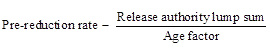
where:
age factor means the age factor for the person on the day on which the annuity becomes payable (see subsection (6)).
pre-reduction rate means the annual rate of the annuity that would, apart from this section (but having regard to any other provisions of this Act that affect that rate), be payable to the person.
(6) The Secretary of the Finance Department may, by legislative instrument, determine the age factor, or the method for working out the age factor, for the purposes of subsection (5).
Multiple release authority lump sums
(7) If more than one release authority lump sum is paid in relation to release authorities issued to a person, a reference in the formula in subsection (2) or (5) to the release authority lump sum is taken to be a reference to the total amount of those release authority lump sums.
Superannuation Act 1976
55 Part IXC (heading)
Repeal the heading, substitute:
Part IXC - Release of benefits to meet deferred Division 293 and 296 tax liabilities
56 Subsection 146RB(1)
After "item 3", insert "or 4".
57 Subsection 146RB(1) (note)
After "Subdivision 133-C", insert "or 134-C".
58 Subsection 146RE(2) (definition of reduced release authority lump sum)
Repeal the definition, substitute:
reduced release authority lump sum means:
(a) the amount of the release authority lump sum, reduced by the sum of each reduction made under a previous application of this section to a lump sum benefit to which the person is entitled; or
(b) if more than one release authority lump sum is paid in relation to release authorities issued to the person - the total amount of those release authority lump sums, reduced by the sum of each reduction made under an application of this section, before the last of those release authority lump sums is paid, to a lump sum benefit to which the person is entitled.
Superannuation Act 1990
59 Subsection 16(8A)
After "item 3", insert "or 4".
60 Subsection 16(8A) (note)
After "Subdivision 133-C", insert "or 134-C".
Taxation Administration Act 1953
61 Subsection 2(1)
Insert:
Division 296 general interest charge rate has the meaning given by subsection 8AAD(1A).
62 Subsection 8AAB(4) (after table item 15B)
Insert:
|
16 |
296-215 |
Income Tax Assessment Act 1997 |
payment of Division 296 tax or shortfall interest charge |
63 Subsection 8AAB(4) (after table item 45C)
Insert:
|
45D |
134-115 in Schedule 1 |
Taxation Administration Act 1953 |
payment of Division 296 debt account discharge liability |
64 After subsection 8AAC(2)
Insert:
(2A) If the charge is payable under Division 296 of the Income Tax Assessment Act 1997 on an amount that remains unpaid, then the charge is worked out by multiplying the Division 296 general interest charge rate for that day by the sum of so much of the following amounts as remains unpaid:
(a) the charge from previous days;
(b) the original unpaid amount.
65 Subsection 8AAC(3)
After "section 8AAZF", insert "of this Act or Division 296 of the Income Tax Assessment Act 1997".
66 Subsection 8AAC(4)
Omit "neither subsection (2) nor (3) applies", substitute "none of subsections (2), (2A) and (3) apply".
67 After subsection 8AAD(1)
Insert:
(1A) The Division 296 general interest charge rate for a day is the rate worked out by:
(a) adding 3 percentage points to the base interest rate for that day; and
(b) dividing that total by the number of days in the calendar year.
68 Section 131-1 in Schedule 1
After:
(b) a notice of assessment of an amount of Division 293 tax; or
insert:
(ba) a notice of assessment of an amount of Division 296 tax; or
69 After paragraph 131-5(1)(c) in Schedule 1
Insert:
(ca) a notice of assessment of an amount of *Division 296 tax payable for the income year that corresponds to the financial year;
70 Paragraph 131-10(1)(a) in Schedule 1
After "3", insert ", 3A".
71 Subsection 131-10(1) in Schedule 1 (after table item 3)
Insert:
|
3A |
an assessment of an amount of *Division 296 tax |
that amount of Division 296 tax |
72 At the end of section 131-15 in Schedule 1
Add:
Issuing if you have an unpaid amount of assessed Division 296 tax that is not deferred to a Division 296 debt account
(5) If:
(a) for an income year, you are given a notice of assessment of an amount of *Division 296 tax that is not *deferred to a Division 296 debt account for a *superannuation interest; and
(b) on the 84th day after the day the Commissioner issues that notice, the sum of the following falls short of that amount of tax:
(i) any payments of that tax for the income year that you have already made;
(ii) any amounts that have already been released under this Subdivision for that assessment;
the Commissioner may issue a release authority to one or more *superannuation providers that hold superannuation interests for you.
73 Subparagraph 131-20(1)(b)(ii) in Schedule 1
Omit "or (4)", substitute ", (4) or (5)".
74 At the end of section 131-65 in Schedule 1
Add:
Exception for voluntary payments of Division 296 tax debt account
(4) Also, if the amount paid in relation to the release authority relates to an amount of *assessed Division 296 tax that is *deferred to a Division 296 debt account for a *superannuation interest:
(a) subsection (1) does not apply in relation to the payment; and
(b) treat the payment as if it were a voluntary payment under section 134-70 in relation to that *Division 296 debt account.
75 After Division 133 in Schedule 1
Insert:
Division 134 - Division 296 tax
Table of Subdivisions
Guide to Division 134
134-A Deferral determination
134-B Division 296 debt account
134-C Compulsory payment
Guide to Division 134
134-1 What this Division is about
Payment of Division 296 tax is deferred to the extent to which the tax is attributable to defined benefit interests from which no superannuation benefit has yet become payable.
This reflects the fact that money generally cannot be released from defined benefit interests until a superannuation benefit is paid, usually upon retirement.
Subdivision 1 34-A - Deferral determination
Guide to Subdivision 134-A
134-5 What this Subdivision is about
The Commissioner determines the amount of your tax that is deferred to a Division 296 debt account by working out the extent to which your assessed tax is attributable to defined benefit interests.
Table of sections
Operative provisions
134-10 Determination of tax that is deferred to a Division 296 debt account
134-15 Your defined benefit Division 296 tax
134-20 Determination reducing tax deferred to a Division 296 debt account
134-25 General provisions applying to determinations under this Subdivision
Operative provisions
134-10 Determination of tax that is deferred to a Division 296 debt account
(1) The Commissioner must make a determination specifying the amount the Commissioner has ascertained as being the extent to which your *assessed Division 296 tax for an income year is attributable to a *superannuation interest that is or includes a *defined benefit interest.
Note 1: For variation and revocation, see subsection 33(3) of the Acts Interpretation Act 1901.
Note 2: For general provisions, including review, see section 134-25.
(2) The amount of *assessed Division 296 tax specified in the determination is deferred to a Division 296 debt account for the *superannuation interest.
(3) However, the Commissioner must not make a determination under this section in relation to a *superannuation interest if, at the time the determination is to be made, the *Division 296 end benefit for the superannuation interest has become payable.
Note: For Division 296 end benefit , see section 134-130.
(4) Subsection (1) does not apply if the Commissioner ascertains that no part of your *assessed Division 296 tax for an income year is *Division 296 tax attributable to a *superannuation interest that is or includes a *defined benefit interest.
134-15 Attribution of Division 296 tax to defined benefit interest
(1) For the purposes of section 134-10, the amount of your*assessed Division 296 tax for an income year attributable to a *superannuation interest that is or includes a *defined benefit interest is to be worked out using the following formula:
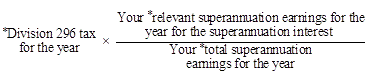
(2) However, no part of the *assessed Division 296 tax for the year is attributable to the *superannuation interest if:
(a) your *relevant superannuation earnings for the year for the superannuation interest is nil; or
(b) the superannuation interest is in a *superannuation plan that is a *foreign superannuation fund for the income year; or
(c) the superannuation interest is a *Division 296 excluded interest in relation to the year.
134-20 Determination reducing tax deferred to a Division 296 debt account
(1) If an amount of *assessed Division 296 tax that is *deferred to a Division 296 debt account for a *superannuation interest is reduced as a result of an amended assessment, the Commissioner must make a determination under this section in respect of the reduced amount.
(2) The amount so determined is a Division 296 deferral reversal for the *superannuation interest.
Note: For variation and revocation, see subsection 33(3) of the Acts Interpretation Act 1901.
134-25 General provisions applying to determinations under this Subdivision
(1) The Commissioner must:
(a) make a determination as soon as practicable after:
(i) for a determination under section 134-10 - assessing the amount (whether by way of a first assessment or an amended assessment); or
(ii) for a determination under section 134-20 - amending the assessment; and
(b) give you notice in writing of the determination as soon as practicable after making it.
(2) The validity of the determination is not affected because any of the provisions of this Act have not been complied with.
Review
(3) If you are dissatisfied with a determination made under this Subdivision in relation to you, you may object against the determination in the manner set out in Part IVC.
(4) If you are dissatisfied with a decision of the Commissioner not to make a determination under this Subdivision:
(a) you may object against the decision in the manner set out in Part IVC; and
(b) for the purpose of working out the period within which the objection must be lodged, notice of the decision is taken to have been served on you on the day notice is given to you of:
(i) for a determination under section 134-10 - the assessment of the amount; or
(ii) for a determination under section 134-20 - the amended assessment.
Note: For the period within which objections must be lodged, see section 14ZW.
Subdivision 1 34-B - Division 296 debt account
Guide to Subdivision 134-B
134-55 What this Subdivision is about
The Commissioner keeps Division 296 debt accounts for Division 296 tax that is deferred to a Division 296 debt account for a superannuation interest.
You can make voluntary payments of the Division 296 debt account.
Table of sections
Operative provisions
134-60 Division 296 debt account to be kept for deferred Division 296 tax
134-65 Interest on Division 296 debt account balance
134-70 Voluntary payments
134-75 Commissioner must notify superannuation provider of Division 296 debt account
Operative provisions
134-60 Division 296 debt account to be kept for deferred Division 296 tax
Accounts to be kept
(1) The Commissioner is to keep a debt account (a Division 296 debt account ) for *Division 296 tax for you for a *superannuation interest, if an amount of your *assessed Division 296 tax is *deferred to a Division 296 debt account for the superannuation interest.
Account to be debited for Division 296 tax
(2) The Commissioner must debit the *Division 296 debt account for the amount of *assessed Division 296 tax that is *deferred to a Division 296 debt account for the *superannuation interest.
134-65 Interest on Division 296 debt account balance
Interest to be debited at end of financial year
(1) If a *Division 296 debt account for a *superannuation interest is in debit at the end of a *financial year, the Commissioner is to debit the account for interest on the amount by which the account is in debit, calculated at the *long term bond rate for that financial year.
Note: Interest would not be debited to a Division 296 debt account that is no longer being kept by the Commissioner because the assessed Division 296 tax liability being tracked in the account has been finally discharged as mentioned in subsection 134-105(3).
Remission of interest - Division 296 deferral reversal
(2) The Commissioner may remit the whole or any part of an amount of interest debited, or to be debited, to a *Division 296 debt account under subsection (1) if:
(a) the Division 296 debt account is credited:
(i) under section 134-70 because of a *Division 296 deferral reversal; or
(ii) because a determination under section 134-10 is varied or revoked; and
(b) the Commissioner is satisfied that, because of that credit, it would be fair and reasonable to do so.
Remission of interest - special circumstances
(3) The Commissioner may remit the whole or any part of an amount of interest debited, or to be debited, to a *Division 296 debt account under subsection (1) if the Commissioner is satisfied that, because special circumstances exist, it would be fair and reasonable to do so.
134-70 Voluntary payments
(1) You may make payments to the Commissioner for the purpose of reducing the amount by which a *Division 296 debt account for a *superannuation interest is in debit.
(2) The Commissioner is to:
(a) acknowledge receipt of the payment to you; and
(b) credit the payment to the *Division 296 debt account; and
(c) notify you of the revised balance of the Division 296 debt account.
The credit mentioned in paragraph (b) is to be made when the payment is received.
(3) The amount of a *Division 296 deferral reversal for the *superannuation interest is to be treated as if it were a voluntary payment under this section in relation to the *Division 296 debt account for that interest. However, paragraphs (2)(a) and (c) do not apply in relation to that amount.
134-75 Commissioner must notify superannuation provider of Division 296 debt account
If the Commissioner starts to keep a *Division 296 debt account for you for a *superannuation interest, the Commissioner must give the *superannuation provider in relation to the superannuation interest a notice saying so.
Subdivision 1 34-C - Compulsory payment
Guide to Subdivision 134-C
134-100 What this Subdivision is about
The deferred Division 296 tax liability must be paid when a superannuation benefit becomes payable from the superannuation interest.
Table of sections
Division 296 debt account discharge liability
134-105 Liability to pay Division 296 debt account discharge liability
134-110 When Division 296 debt account discharge liability must be paid
134-115 General interest charge
134-120 Meaning of Division 296 debt account discharge liability
134-125 Notice of Division 296 debt account discharge liability
Division 296 end benefit
134-130 Meaning of Division 296 end benefit
134-135 Superannuation provider may request Division 296 debt account status
134-140 Division 296 end benefit notice - superannuation provider
134-145 Division 296 end benefit notice - material changes or omissions
Division 296 debt account discharge liability
134-105 Liability to pay Division 296 debt account discharge liability
(1) You are liable to pay the amount of your *Division 296 debt account discharge liability for a *superannuation interest if the *Division 296 end benefit for the interest becomes payable.
(2) The liability arises:
(a) unless paragraph (b) applies - at the time the *Division 296 end benefit becomes payable; or
(b) if the Division 296 end benefit is a *superannuation death benefit - just before you die.
Note 1: For paragraph (a), a release authority allows money to be released from the superannuation plan to pay this amount: see subsection 135-10(1).
Note 2: For paragraph (b), the debt will be recovered from your estate: see Subdivision 260-E.
(3) Payment of your *Division 296 debt account discharge liability for a *superannuation interest discharges your liability for so much of your total *assessed Division 296 tax for all income years as is *deferred to a Division 296 debt account for the superannuation interest.
134-110 When Division 296 debt account discharge liability must be paid
The amount of your *Division 296 debt account discharge liability for a *superannuation interest is due and payable at the end of 21 days after the day on which the *Division 296 end benefit for the superannuation interest is paid.
134-115 General interest charge
If your *Division 296 debt account discharge liability remains unpaid after the time by which it is due and payable, you are liable to pay the *general interest charge on the unpaid amount for each day in the period that:
(a) begins on the day on which the Division 296 debt account discharge liability was due to be paid; and
(b) ends on the last day on which, at the end of the day, any of the following remains unpaid:
(i) the Division 296 debt account discharge liability;
(ii) general interest charge on any of the Division 296 debt account discharge liability.
Note: The general interest charge is worked out under Part IIA. For the rate of general interest charge payable, see subsection 8AAC(3).
134-120 Meaning of Division 296 debt account discharge liability
The Division 296 debt account discharge liability for a *superannuation interest for which the Commissioner keeps a *Division 296 debt account is the amount by which the Division 296 debt account is in debit at the time the *Division 296 end benefit for the superannuation interest becomes payable.
134-125 Notice of Division 296 debt account discharge liability
(1) The Commissioner must give you a notice under this section if the *Division 296 end benefit becomes payable from a *superannuation interest for which the Commissioner keeps a *Division 296 debt account.
(2) The notice must state that you are liable to pay your *Division 296 debt account discharge liabilityfor the *superannuation interest and specify:
(a) the amount of that debt; and
(b) the day on which that debt is due and payable.
(3) If you are dissatisfied with a notice given under this section in relation to you, you may object against it in the manner set out in Part IVC of this Act.
(4) However, you cannot object against a notice stating that the amount you are liable to pay is the amount by which the *Division 296 debt account is in debit.
Division 296 end benefit
134-130 Meaning of Division 296 end benefit
(1) A *superannuation benefit is the Division 296 end benefit for a *superannuation interest if it is the first superannuation benefit to become payable from the interest, disregarding a benefit that is any of the following:
(a) a *roll-over superannuation benefit paid to a *complying superannuation plan that is a *successor fund;
(b) a *family law superannuation payment;
(c) a benefit that becomes payable under the condition of release specified in item 105 of the table in Schedule 1 to the Superannuation Industry (Supervision) Regulations 1994 (about severe financial hardship);
(d) a benefit that becomes payable under the condition of release specified in item 107 of that table (about compassionate ground);
(e) a benefit specified in an instrument under subsection (2).
(2) The Minister may, by legislative instrument, specify a *superannuation benefit for the purposes of paragraph (1)(e).
134-135 Superannuation provider may request Division 296 debt account status
(1) If:
(a) a *superannuation provider has been given a notice under section 134-75 saying that the Commissioner has started to keep a *Division 296 debt account for a *superannuation interest; and
(b) the superannuation provider receives a request to pay the *Division 296 end benefit from the superannuation interest or the Division 296 end benefit becomes payable from the superannuation interest;
the superannuation provider may, in the *approved form, request the Commissioner to advise as to the status of the Division 296 debt account.
(2) If the Commissioner receives a request, the Commissioner must advise the *superannuation provider as soon as practicablewhether or not the *Division 296 debt account is in debit.
134-140 Division 296 end benefit notice - superannuation provider
(1) If the *Division 296 end benefit becomes payable from a *superannuation interest for which the Commissioner keeps a *Division 296 debt account, the *superannuation provider in relation to the interest must give the Commissioner a notice stating the expected date of payment of the benefit.
Note: If a person is dissatisfied with a notice given to the Commissioner under this subsection, the person may make a complaint under the AFCA scheme (within the meaning of the Corporations Act 2001).
(2) The notice must be given within 14 days after the earlier of:
(a) the *superannuation provider receiving a request (if any) to pay the *superannuation benefit; and
(b) the superannuation benefit becoming payable.
(3) However, this section does not apply if the *superannuation provider has not been given a notice under section 134-75 saying that the Commissioner has started to keep a *Division 296 debt account for the *superannuation interest.
(4) A notice under this section must be given in the *approved form.
134-145 Division 296 end benefit notice - material changes or omissions
(1) If an entity that gives the Commissioner a notice under section 134-140 becomes aware of a material change or material omission in any information given to the Commissioner in the notice, the entity must:
(a) tell the Commissioner of the change in the *approved form; or
(b) give the omitted information to the Commissioner in the approved form.
(2) Information required by this section must be given no later than 7 days after the entity becomes aware of the change or omission.
76 Subsection 135-10(1) in Schedule 1 (at the end of the table)
Add:
|
4 |
You become liable to pay your *Division 296 debt account discharge liability for a *superannuation interest |
The amount of your Division 296 debt account discharge liability |
On the giving of the notice under section 134-125 |
77 At the end of section 135-40 in Schedule 1
Add:
(4) Also, a release authority issued under item 4 of the table in subsection 135-10(1) (for Division 296 debt account discharge liability) may only be given to the *superannuation provider that holds the *superannuation interest to which the *Division 296 debt account relates.
78 After section 135-95 in Schedule 1
Insert:
135-97 Defined benefit interests - releasing amounts to pay Division 296 debt account discharge liability
The exclusion of *defined benefit interests from subsection 135-75(4) and paragraph 135-85(c) is to be disregarded for a release authority issued under item 4 of the table in subsection 135-10(1) (about Division 296 debt account discharge liability).
79 After paragraph 155-5(2)(f) in Schedule 1
Insert:
(fa) an amount of *Division 296 tax payable for an income year in relation to an individual's *taxable superannuation earnings for the income year;
80 Subsection 155-15(1) in Schedule 1 (note)
After "Division 293 tax,", insert "Division 296 tax,".
81 After paragraph 155-30(3)(a) in Schedule 1
Insert:
(aa) the *Division 296 tax payable by you in relation to an income year in relation to your *taxable superannuation earnings for the income year;
82 Subsection 250-10(2) in Schedule 1 (after table item 37AC)
Insert:
|
37ACA |
shortfall interest charge on Division 296 tax |
5-10 |
Income Tax Assessment Act 1997 |
83 Subsection 250-10(2) in Schedule 1 (after table item 38BB)
Insert:
|
38BBA |
Division 296 tax |
296-205 and 296-210 |
Income Tax Assessment Act 1997 |
84 Subsection 250-10(2) in Schedule 1 (after table item 136A)
Insert:
|
136B |
Division 296 debt account discharge liability |
134-105 in Schedule 1 |
Taxation Administration Act 1953 |
85 Section 280-1 in Schedule 1
After "Division 293 tax,", insert "Division 296 tax,".
86 Section 280-50 in Schedule 1
After "*Division 293 tax,", insert "*Division 296 tax,".
87 After section 280-102B in Schedule 1
Insert:
280-102BA Liability to shortfall interest charge - Division 296 tax
(1) You are liable to pay *shortfall interest charge on an additional amount of *Division 296 tax that you are liable to pay because the Commissioner amends your assessment of an amount of Division 296 tax payable in relation to an income year.
(2) However, subsection (1) does not apply to the extent the additional amount of *Division 296 tax is *deferred to a Division 296 debt account for a *superannuation interest.
(3) The liability is for each day in the period:
(a) beginning on the day on which *Division 296 tax under your first assessment of Division 296 tax for that income year was due to be paid; and
(b) ending on the day before the day on which the Commissioner gave you notice of the amended assessment.
(4) However, if an amended assessment reinstates all or part of a liability in relation to a particular that had been reduced by an earlier amended assessment, the period for the reinstated liability begins at the start of the day on which *Division 296 tax under the earlier amended assessment was due to be paid.
Note 1: See section 5-10 of the Income Tax Assessment Act 1997 for when the amount of shortfall interest charge becomes due and payable.
Note 2: See Subdivision 296-C of that Act for when the amount of assessed Division 296 tax becomes due and payable. That Subdivision also provides for general interest charge on any part of the additional amount (plus any shortfall interest charge) that remains unpaid after the additional amount is due and payable.
88 Paragraph 280-105(1)(a) in Schedule 1
Omit "or *Division 293 tax,", substitute ", *Division 293 tax or *Division 296 tax".
89 Subsection 280-110(1) in Schedule 1
After "280-102B", insert ", 280-102BA".
90 Section 280-170 in Schedule 1
Omit "or *Division 293 tax", substitute ", *Division 293 tax or *Division 296 tax".
91 After paragraph 390-5(9)(b) in Schedule 1
Insert:
(ba) the amount of the individual's *relevant superannuation earnings for an income year for any superannuation interest the individual held in the superannuation plan (unless it is an amount taken to be nil under subsection 296-55(2) of the Income Tax Assessment Act 1997);
Schedule 2 Definition of total superannuation balance
Income Tax Assessment Act 1997
1 Subsection 307-205(1)
Omit "(1)".
2 Subsection 307-205(2)
Repeal the subsection.
3 Paragraphs 307-230(1)(a) and (b)
Repeal the paragraphs, substitute:
(a) the *total superannuation balance value, at that time, of each of the following *superannuation interests (other than an interest in a *superannuation plan that, at that time, is a *foreign superannuation fund):
(i) a superannuation interest of yours;
(ii) a superannuation interest that supports a *superannuation income stream of which you are a *retirement phase recipient because of the death of another person;
4 Subparagraph 307-230(1)(c)(iii)
Omit "or the balance in paragraph (b)".
5 Subsections 307-230(2) to (4)
Repeal the subsections, substitute:
Modification for structured settlement contributions
(2) However, if a *structured settlement contribution is made at or before a time in respect of you, your total superannuation balance at that time is modified by reducing the sum worked out under subsection (1) by the sum of any such structured settlement contributions.
Family law splits
(3) For the purposes of the provisions mentioned in subsection (5), you are treated as having a *superannuation interest in a *superannuation plan if:
(a) you are a *non-member spouse in relation to a superannuation interest that:
(i) is an interest in that superannuation plan; and
(ii) is subject to a *payment split but remains an interest of the *member spouse; and
(b) circumstances prescribed by the regulations for the purposes of this paragraph exist.
(4) For the purposes of the provisions mentioned in subsection (5), the regulations must specify whether the *superannuation interest that you are treated as having is to be treated as being a *defined benefit interest.
Note: Regulations made for the purposes of paragraph 307-230A(1)(a) may specify the total superannuation balance value of the interest.
(5) The provisions are the following:
(a) subsection (1) of this section;
(b) section 307-230A;
(c) the *Division 296 tax law.
6 After section 307-230
Insert:
307-230A Total superannuation balance value
(1) The total superannuation balance value , at a particular time, of a *superannuation interest is:
(a) if the regulations specify a value, or a method for determining a value, for the purposes of this paragraph - the specified value, or the value determined in accordance with the specified method; or
(b) otherwise - the total amount of the *superannuation benefits that would become payable if:
(i) the individual to whom the superannuation interest relates had the right to cause the superannuation interest to cease at that time; and
(ii) the individual voluntarily caused the superannuation interest to cease at that time.
(2) Regulations made for the purposes of paragraph (1)(a) may specify a value or method in different ways depending on any of the following matters:
(a) the individual to whom the *superannuation interest relates;
(b) whether the superannuation interest is in the *retirement phase;
(c) whether the superannuation interest is or includes a *defined benefit interest;
(d) the *superannuation income stream (if any) supported by the superannuation interest;
(e) if the superannuation interest is an interest in a *superannuation fund or *approved deposit fund - the rules of the fund;
(f) if the superannuation interest is an interest in an *RSA - the terms and conditions of the RSA;
(g) the *superannuation provider in relation to the *superannuation plan in which the individual holds the superannuation interest;
(h) whether the superannuation interest is subject to a *payment split;
(i) whether the individual is treated as having the superannuation interest under subsection 307-230(3);
(j) the death of the individual;
(k) any other matter.
(3) Regulations made for the purposes of paragraph (1)(a) may provide for a value to be determined wholly or partly by reference to:
(a) methods or factors that are approved by legislative instrument by a Minister:
(i) for the purposes of the regulations; or
(ii) for the purposes of another Act or legislative instrument; or
(b) an *actuary's certificate.
(4) Regulations made for the purposes of paragraph (1)(a) may specify circumstances in which a *total superannuation balance value is nil.
(5) Subsections (2), (3) and (4) do not limit the regulations that may be made for the purposes of paragraph (1)(a).
7 Subsection 995-1(1) (definition of accumulation phase value)
Repeal the definition.
8 Subsection 995-1(1)
Insert:
total superannuation balance value has the meaning given by section 307-230A.
9 Subsection 995-1(1) (paragraph (d) of the definition of value)
Omit "subsection 307-205(1)", substitute "section 307-205".
10 Application of amendments
The amendments of the Income Tax Assessment Act 1997 made by this Schedule apply in relation to working out what your total superannuation balance is, or what the total superannuation balance value of a superannuation interest is, at a particular time if that time occurs:
(a) just before 1 July 2026; or
(b) on or after 1 July 2026.
Taxation Administration Act 1953
11 Paragraph 390-5(9)(b) in Schedule 1
After "*value", insert "or *total superannuation balance value".
Schedule 3 Other amendments relating to superannuation
Income Tax Assessment Act 1997
1 Subsection 293-65(2) (note 3)
Omit "Division 135", substitute "Division 131".
2 At the end of Division 293
Add:
Subdivision 293-H - Other provisions
Guide to Subdivision 293-H
293-245 What this Subdivision is about
This Division has effect despite subsection 73(3A) of the Australian Capital Territory (Self-Government) Act 1988.
Table of sections
Operative provisions
293-250 Interaction with the Australian Capital Territory (Self-Government) Act 1988
Operative provisions
293-250 Interaction with the Australian Capital Territory (Self-Government) Act 1988
This Division has effect despite subsection 73(3A) of the Australian Capital Territory (Self-Government) Act 1988.
Note: That subsection relates to the remuneration of judges and magistrates of the Australian Capital Territory.
3 Application of amendments
Section 293-250 of the Income Tax Assessment Act 1997, as inserted by this Schedule, applies in relation to the 2012-13 income year and later income years.
4 Subsection 294-80(1) (table item 4)
Omit "payment split", substitute "*payment split".
Schedule 4 Low income tax offset
Superannuation (Government Co-contribution for Low Income Earners) Act 2003
1 Paragraph 12C(1)(b) and subparagraph 12C(2)(c)(i)
Omit "$37,000", substitute "the dollar amount mentioned in item 1 of the table for that income year in Part I of Schedule 7 to the Income Tax Rates Act 1986".
2 Paragraph 12E(2)(b)
Omit "$500 - $500", substitute "the amount worked out under subsection (3A) for that income year - the amount worked out under subsection (3A) for that income year".
3 After subsection 12E(3)
Insert:
(3A) For the purposes of paragraph (2)(b) the amount for an income year is the amount worked out using the formula:

where:
eligibility threshold amount for income year means the dollar amount mentioned in item 1 of the table for that income year in Part I of Schedule 7 to the Income Tax Rates Act 1986.
charge percentage has the same meaning as in subsection 17A(2) of the Superannuation Guarantee (Administration) Act 1992.
4 Application
The amendments made by this Schedule apply to the 2027-28 income year and later income years.